Phases Of Price: Consolidation
The lesson has four parts: the explanation, when and how consolidation happens, the consolidation itself, and examples.

The slides from the video, with an explanation under each one. Watch the video, then keep the PDF.
The lesson has four parts: the explanation, when and how consolidation happens, the consolidation itself, and examples.
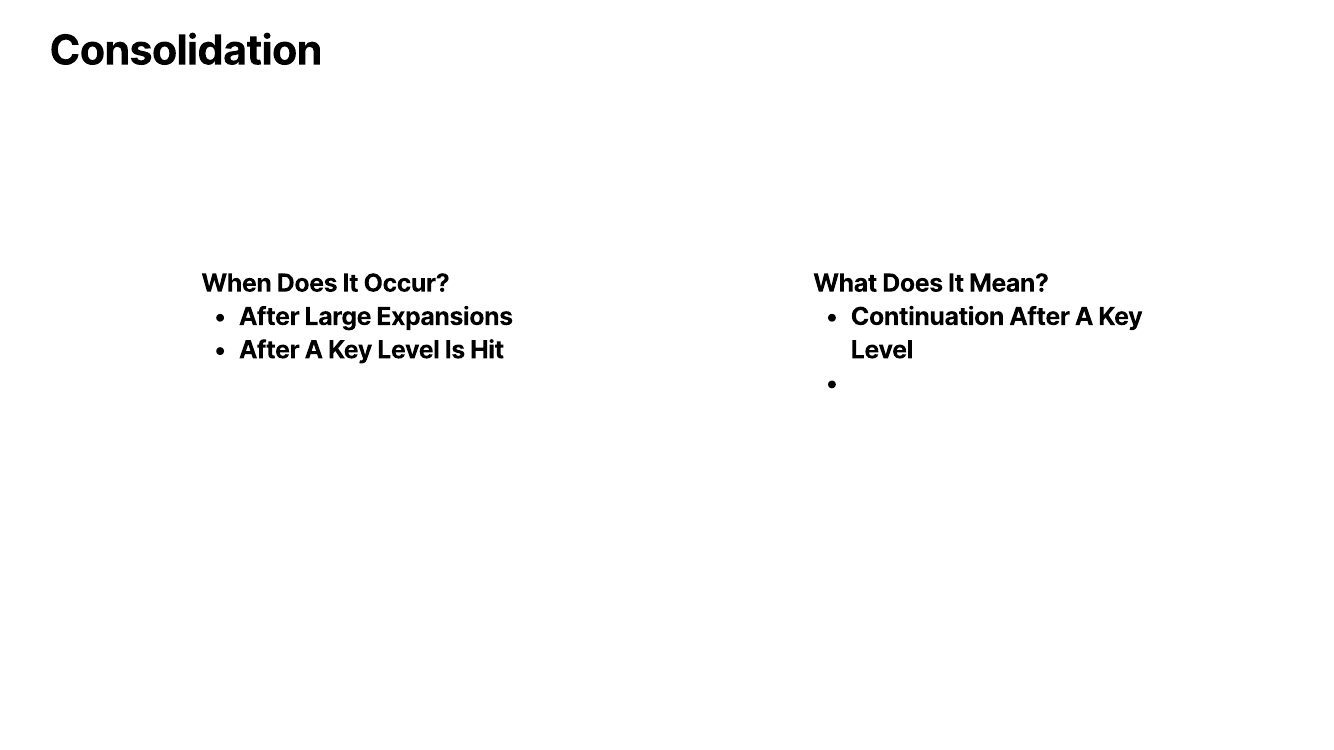
Consolidation happens after large expansions and after a key level is hit. When it does, it usually means a continuation is coming after that key level.
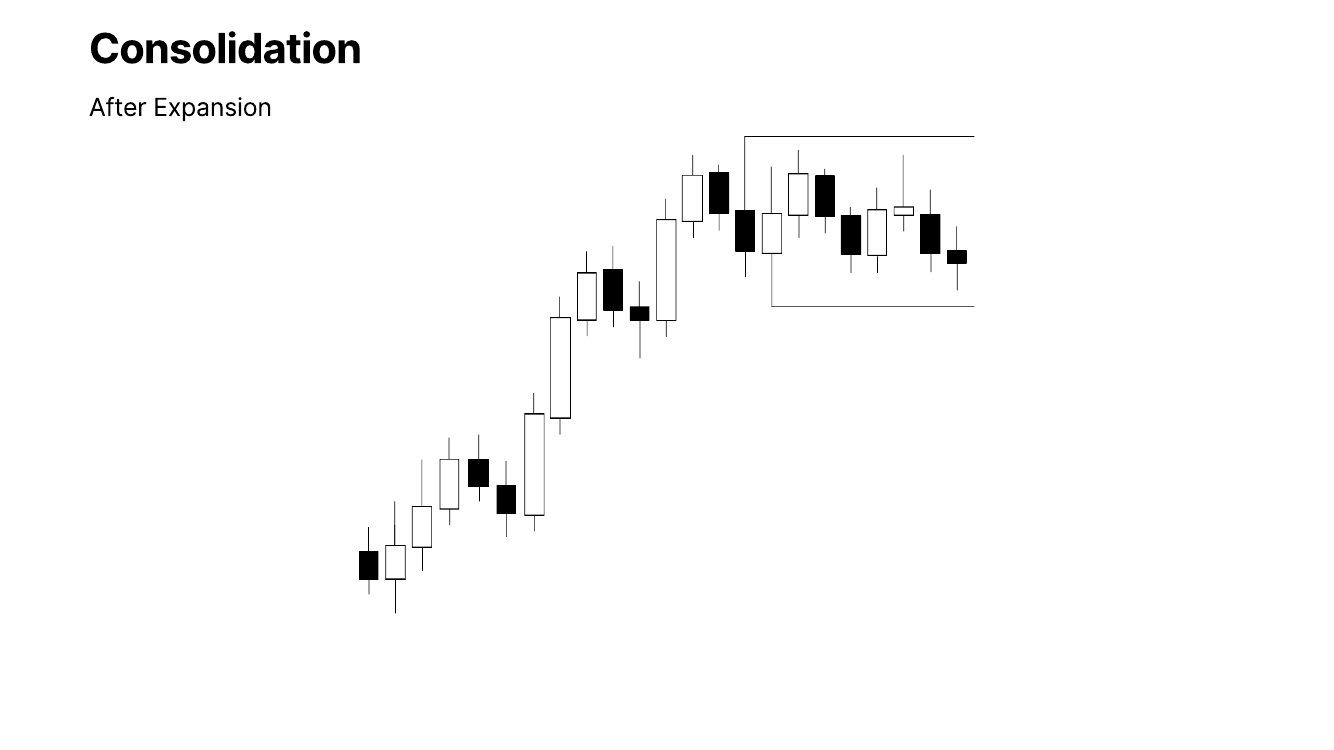
Example of consolidation after a large expansion. Price pushes up in a strong move, then stalls and builds a range, with the high and low of the range marked.
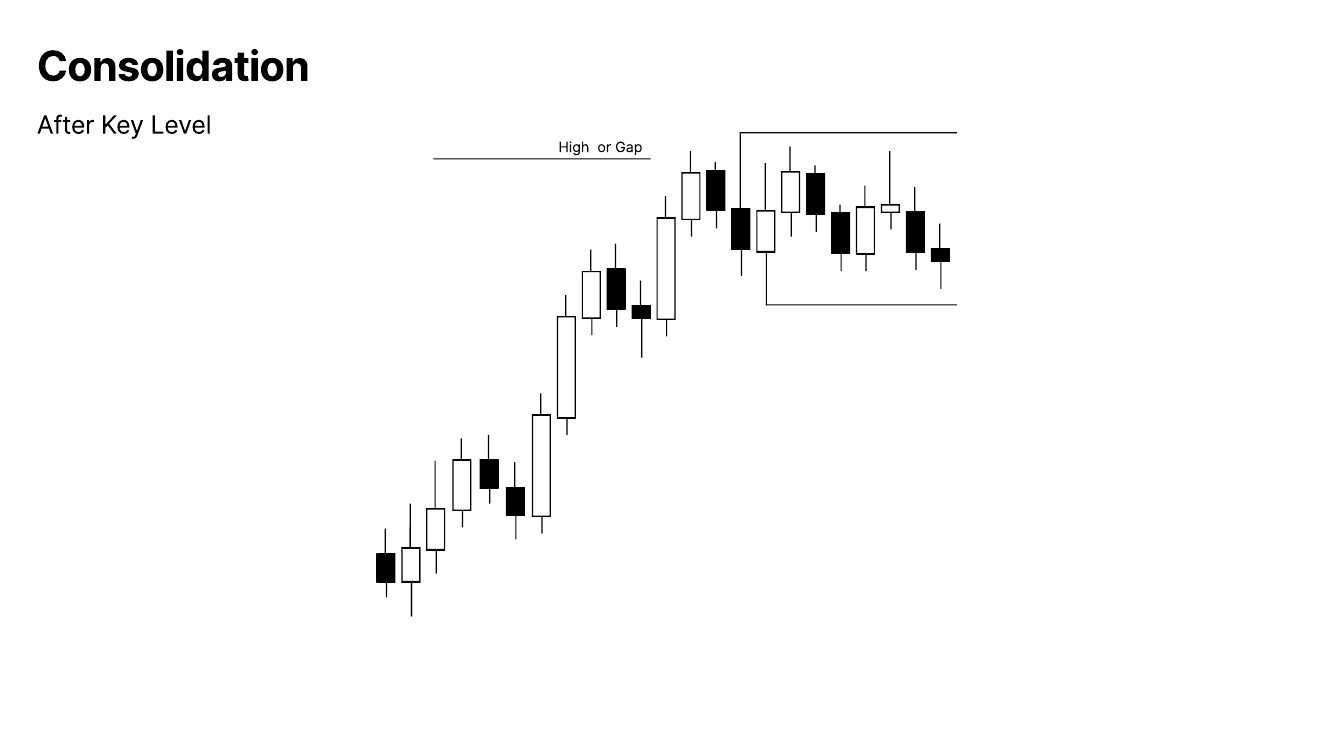
Example of consolidation after a key level. Price runs up to a high or a gap, then stalls and builds a range right after it.
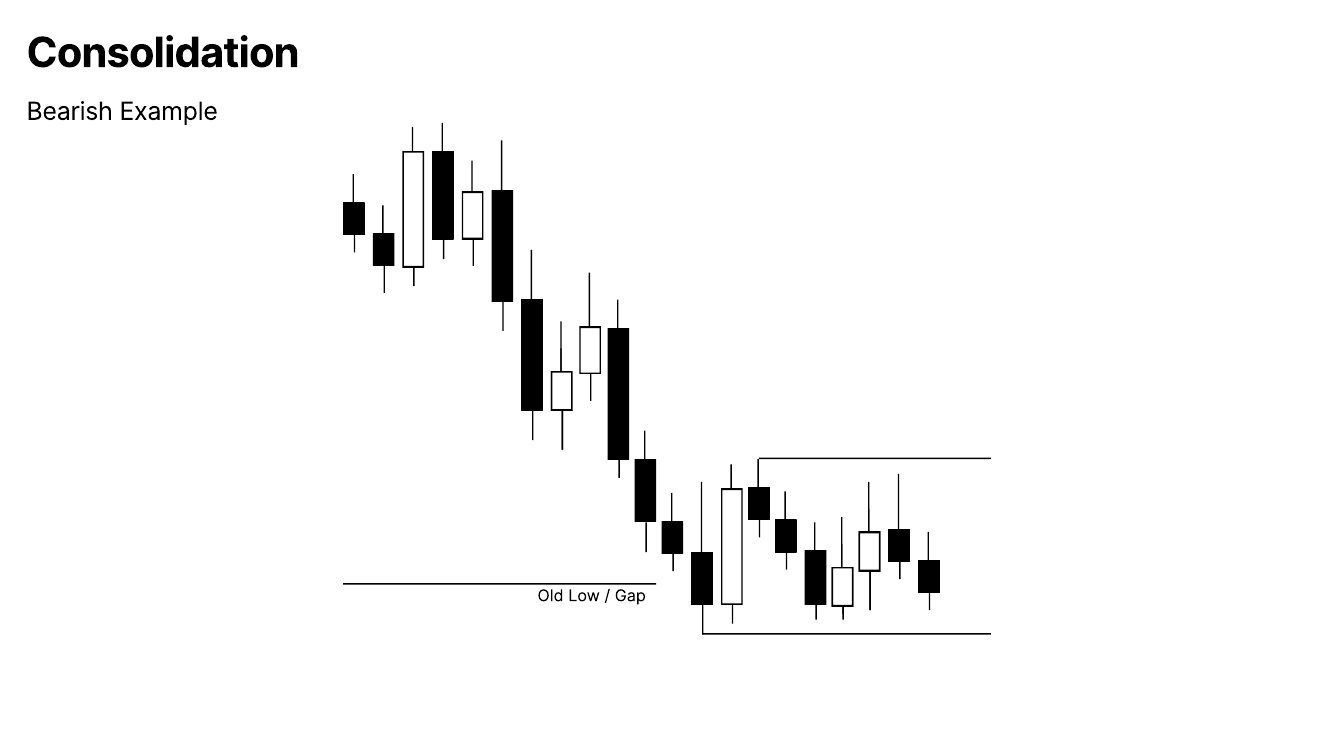
The same idea in the other direction. Price drops into an old low or gap, then builds a range, with the range high and low marked.
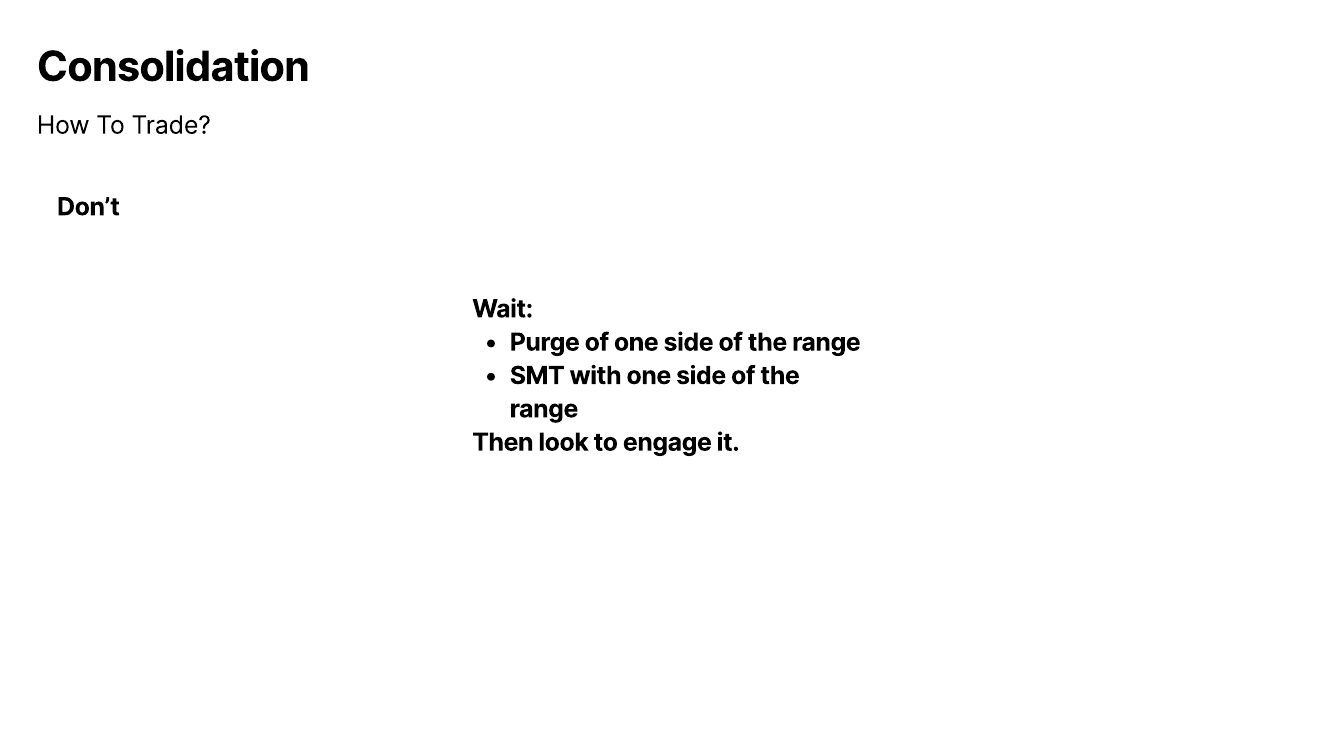
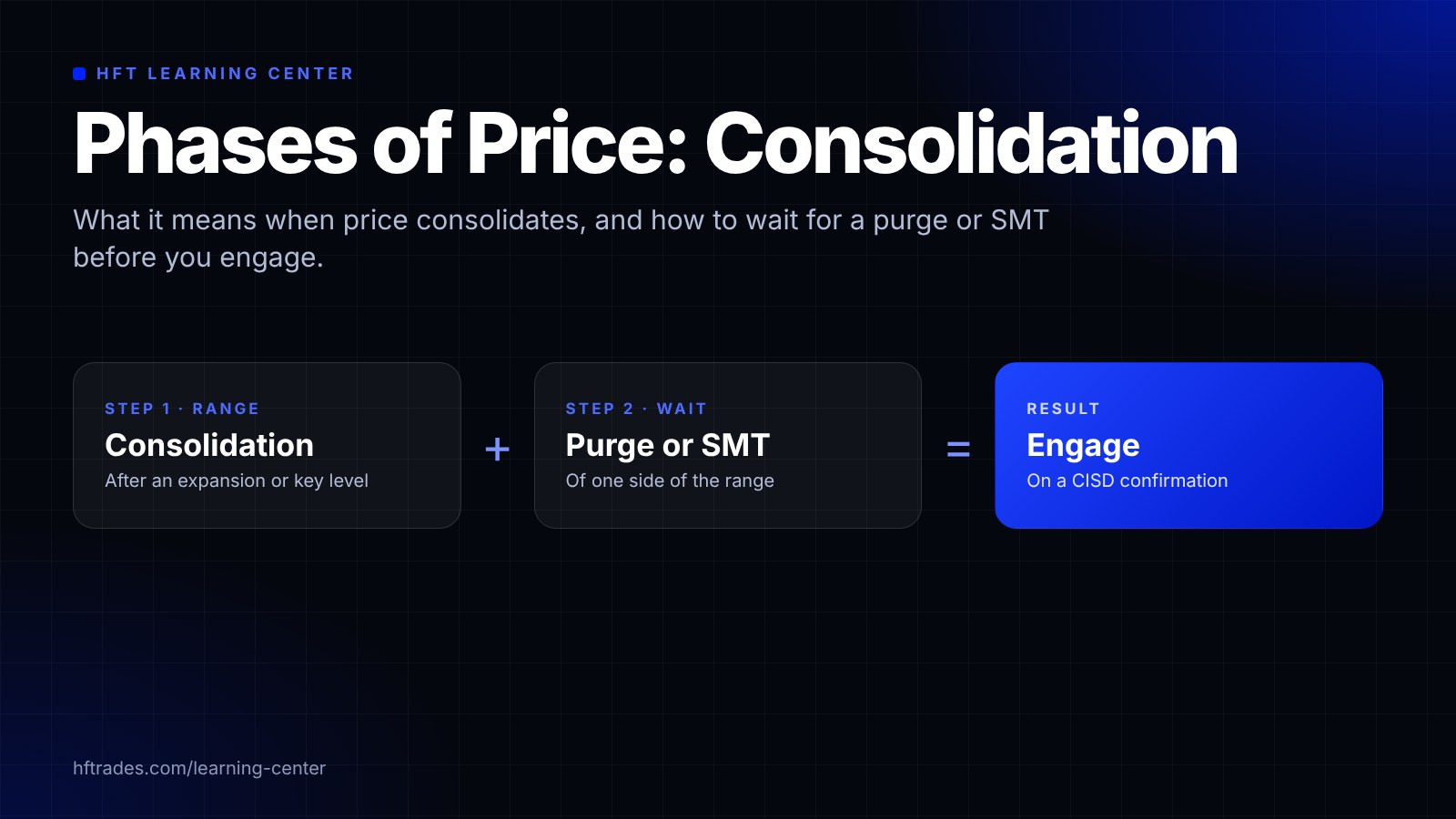
Don't jump in while price is stuck in the range. Wait for a purge of one side of the range, or for SMT with one side of the range. Then look to engage it.
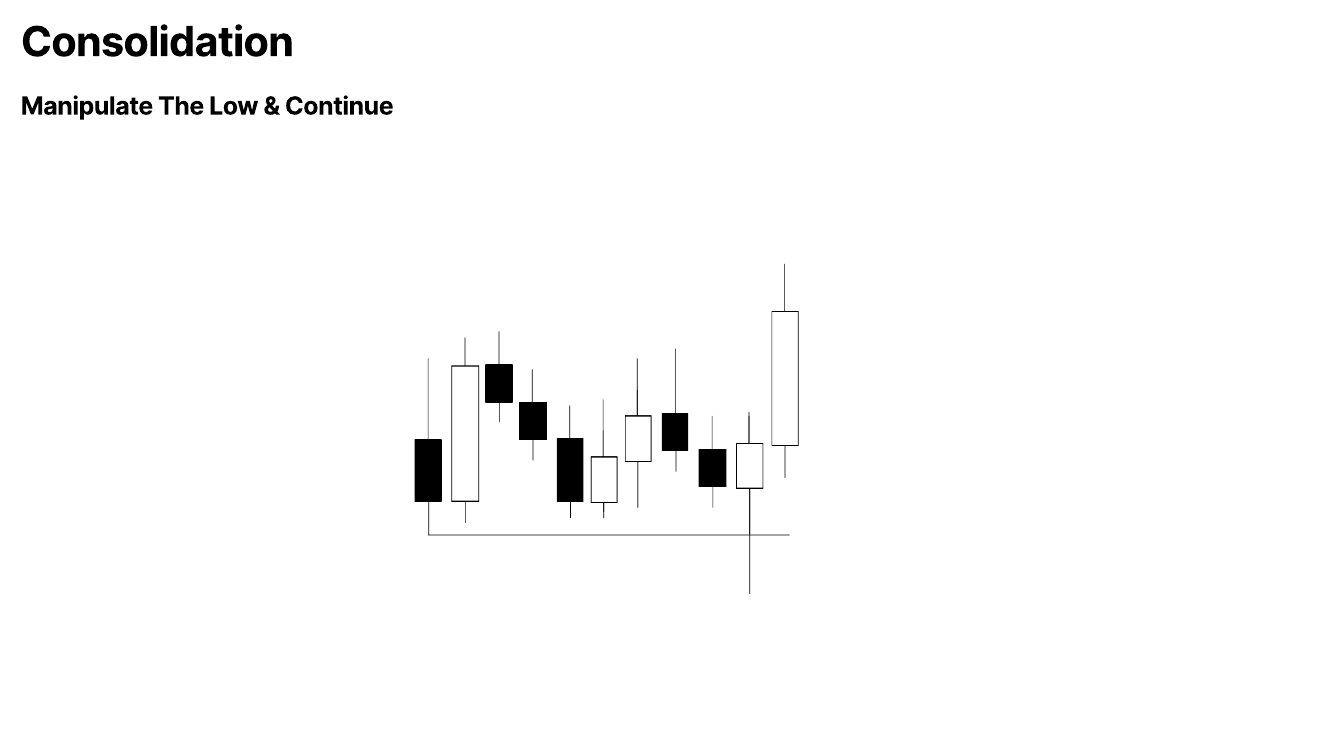
Example of waiting for a purge. Price takes the low of the range, which is the manipulation, and then continues up out of it.
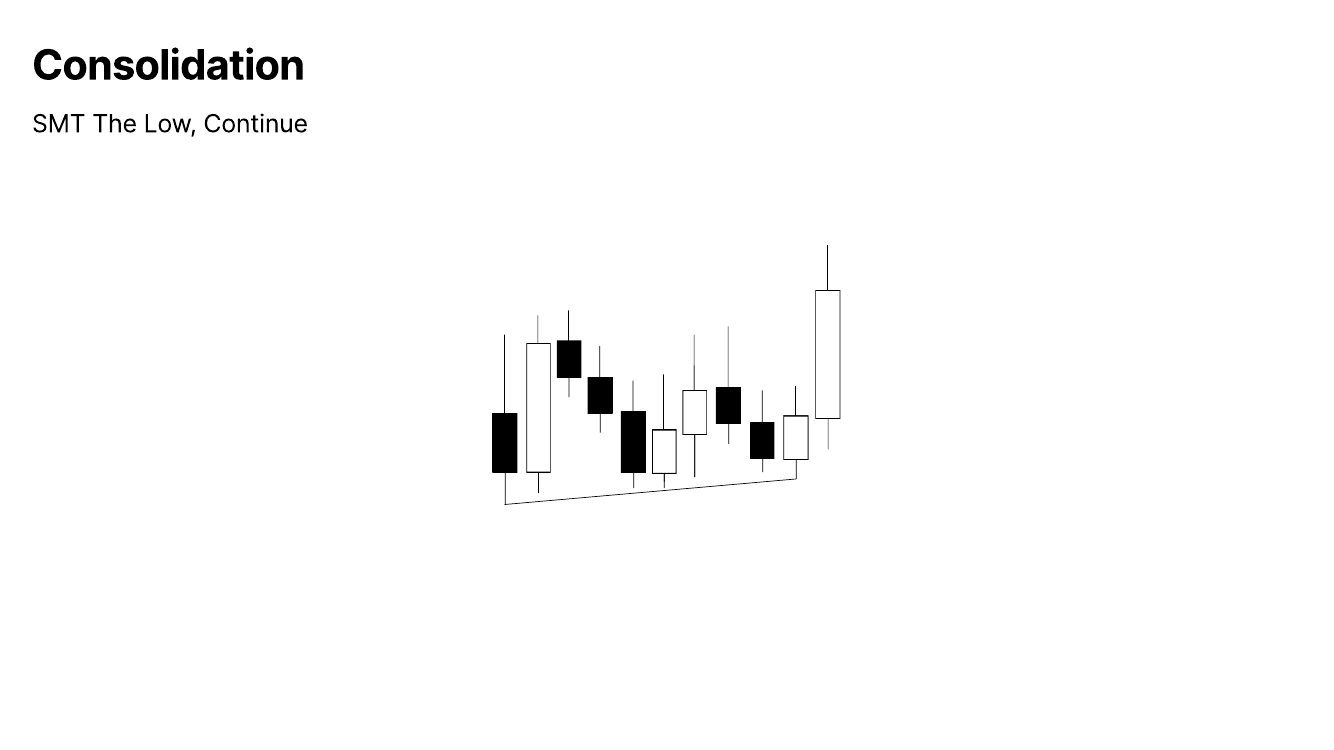
Example of waiting for SMT. SMT forms at the low of the range, and price then continues up out of it.
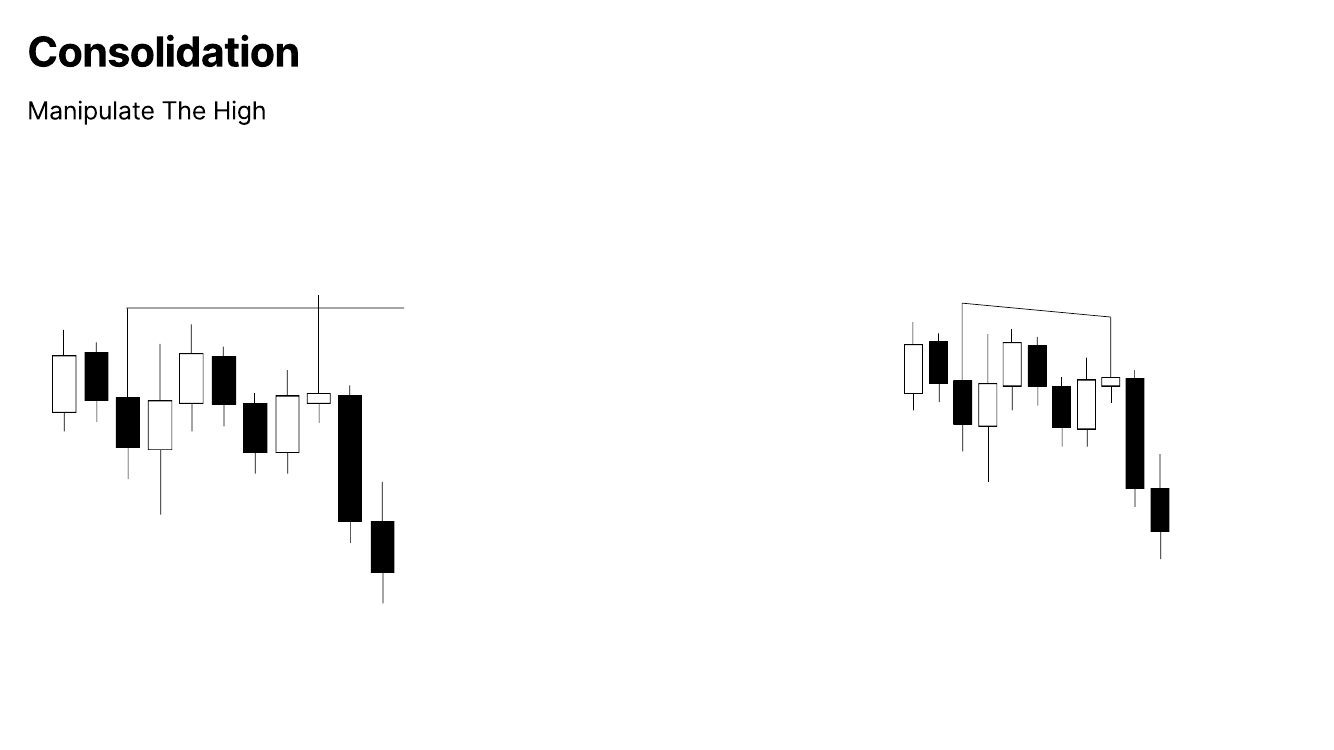
The same two ideas on the high side. The example on the left shows price purging the range high, and the example on the right shows SMT at the high. Both are followed by price moving down.
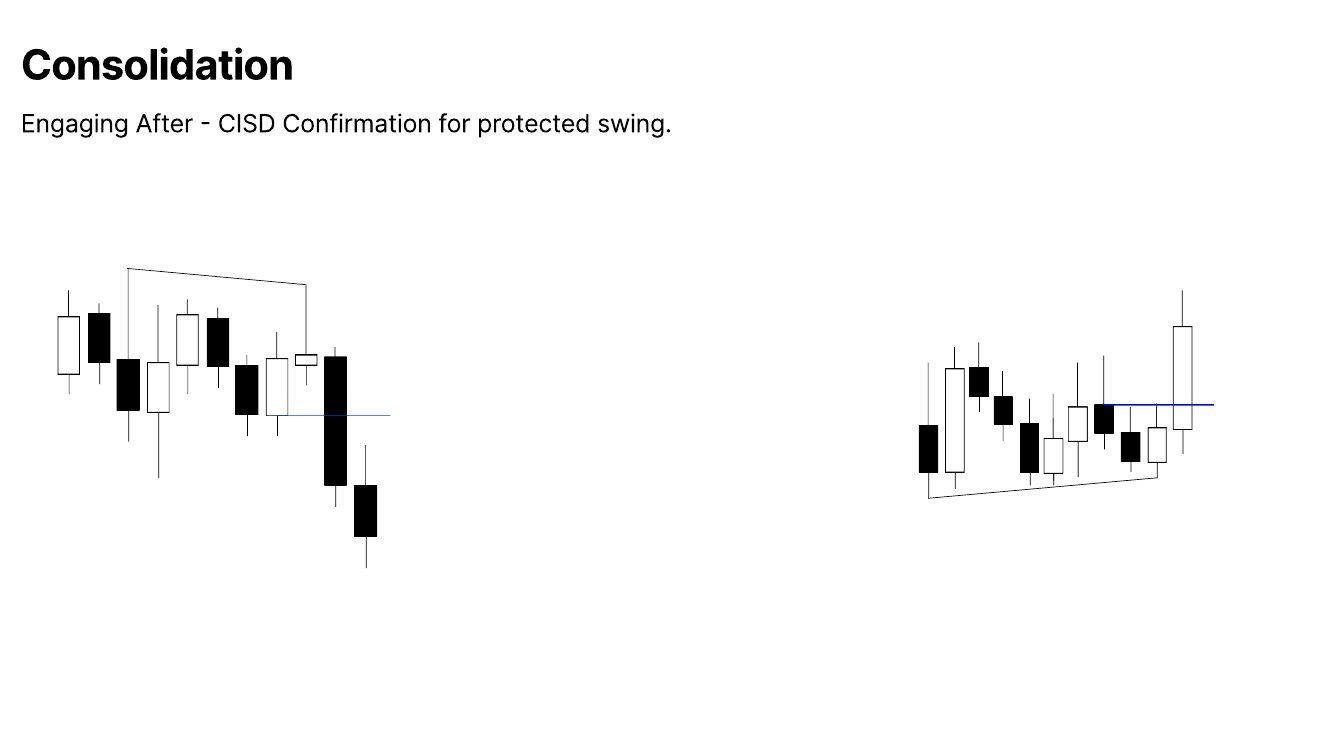
Once the purge or SMT has happened, you engage on a CISD confirmation for the protected swing. There is one example in each direction: a bearish one on the left and a bullish one on the right. In each, price closes through the marked level, which is your confirmation to engage.
New guides land here first, and the newsletter tells you when they do.