10 A.M. Continuation Guide
The guide has five parts: the explanation, key levels, the 6 AM reversal, the 10 AM continuation, and examples.

The slides from the video, with an explanation under each one. Watch the video, then keep the PDF.
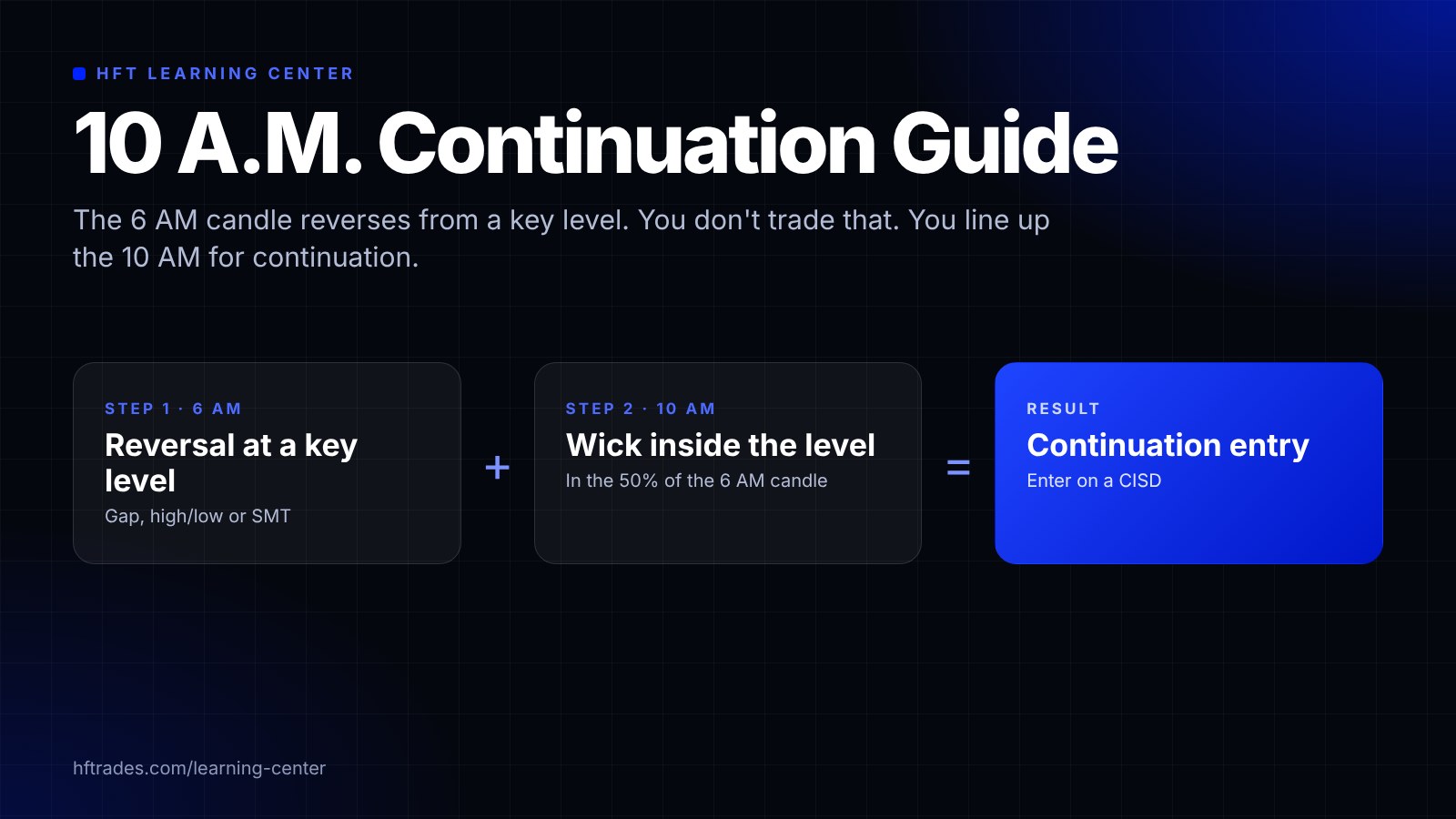
The guide has five parts: the explanation, key levels, the 6 AM reversal, the 10 AM continuation, and examples.
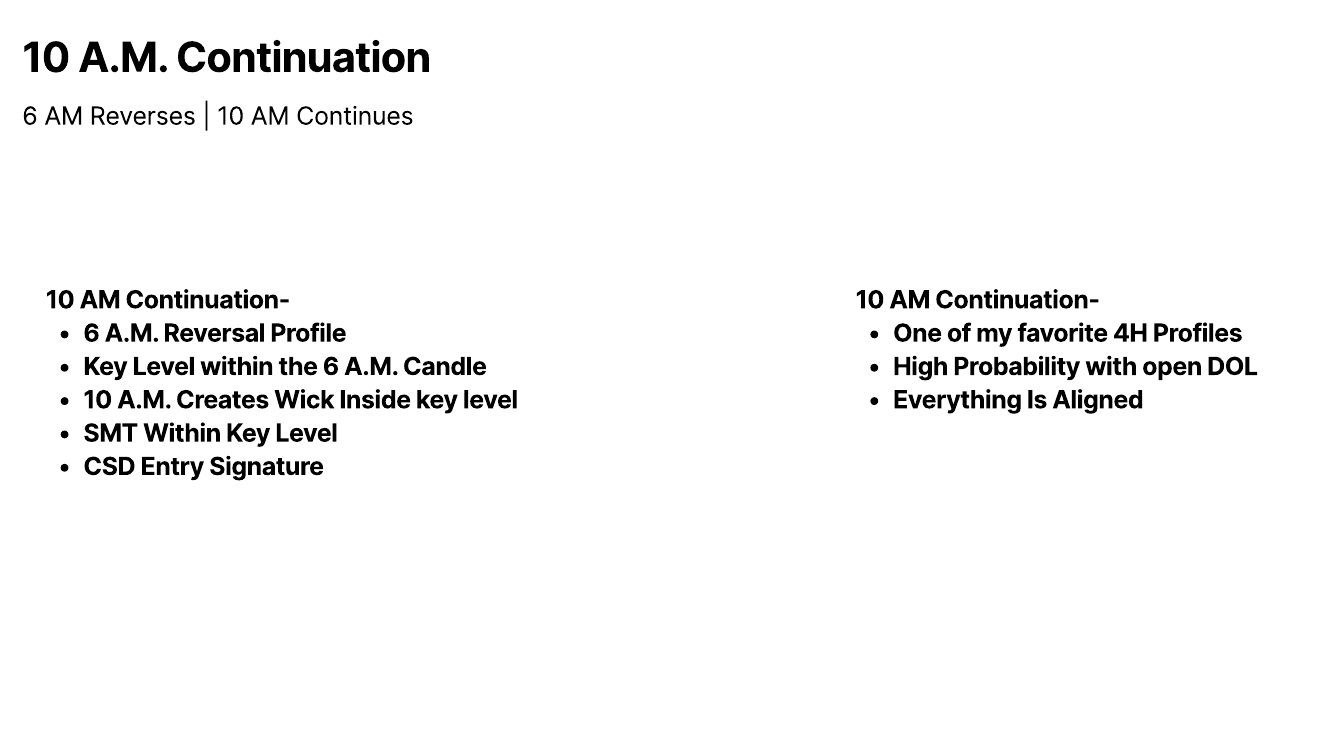
The 6 AM reverses and the 10 AM continues. The checklist is: a 6 AM reversal profile (one of your favorite 4H profiles), a key level within the 6 AM candle, a 10 AM wick formed inside that key level, SMT within the key level, and a CISD entry signature. It's higher probability when the DOL is still open, and everything is aligned.
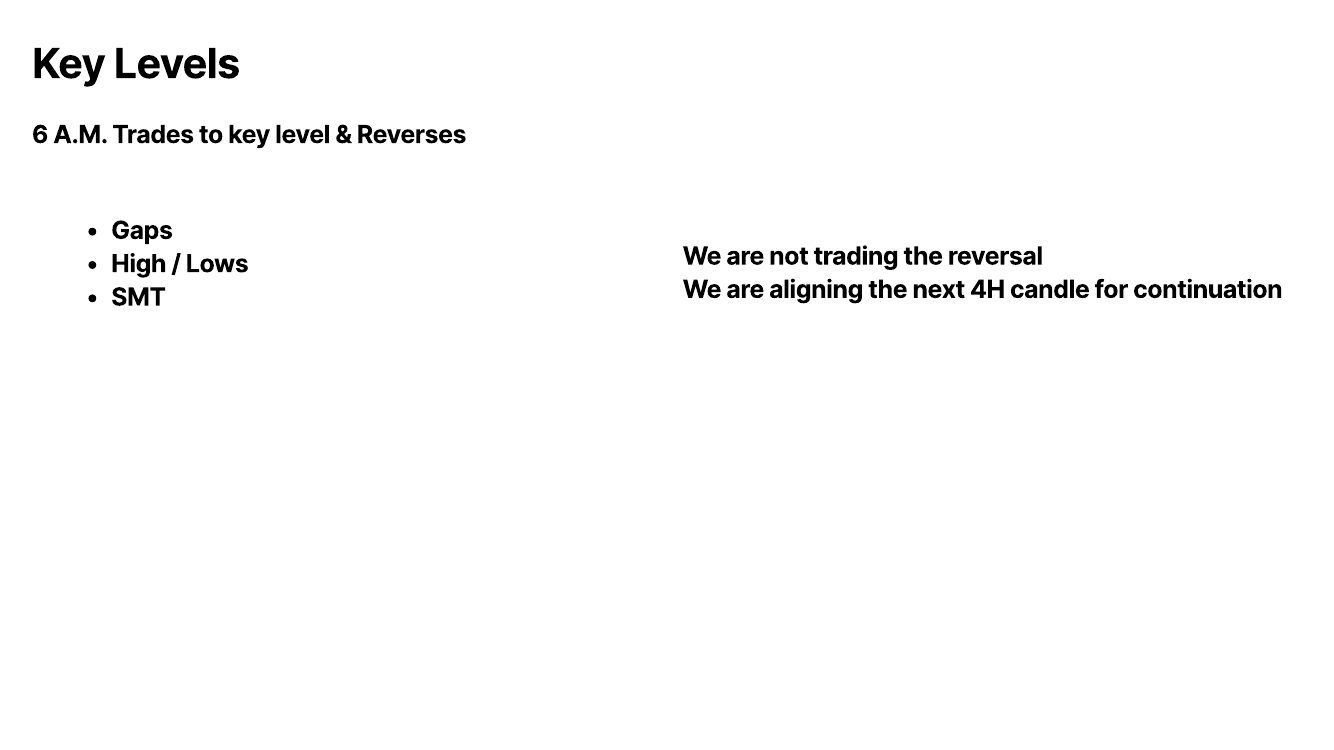
The 6 AM candle trades to a key level and reverses. The key levels are gaps, highs and lows, and SMT. You are not trading the reversal. You are lining up the next 4H candle, the 10 AM, for continuation.
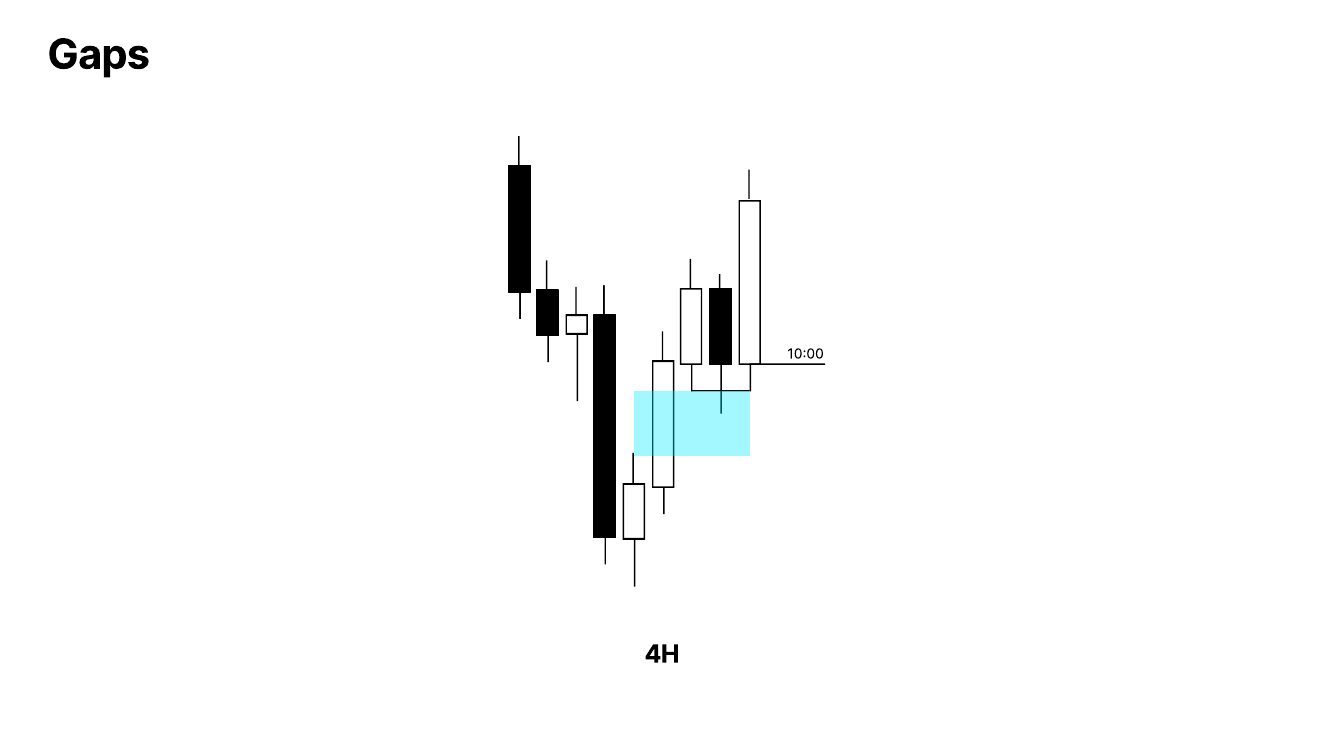
Example of the key level being a gap. On the 4H, price trades into the shaded fair value gap and reverses, and the 10:00 level is marked so you can see where the 10 AM candle sits.
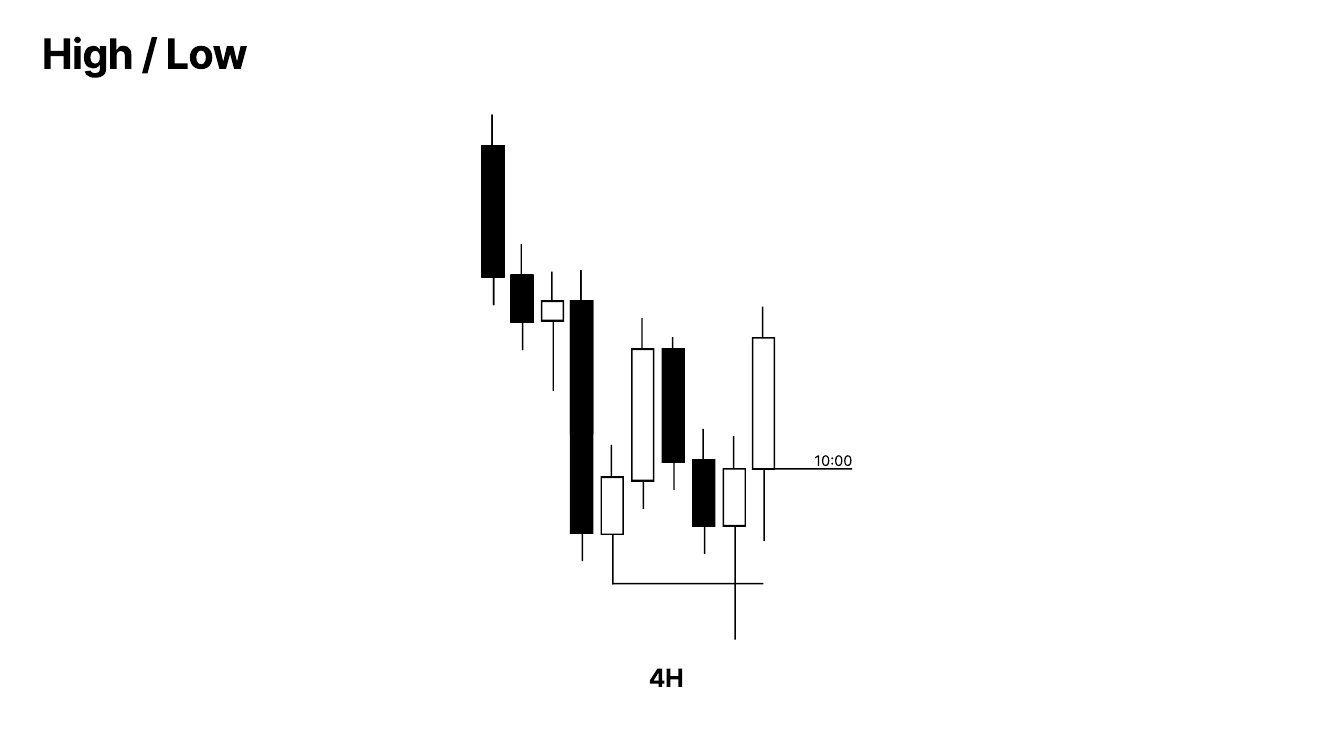
Example of the key level being a high or low. On the 4H, price takes an old low and reverses from it, with the 10:00 level marked.
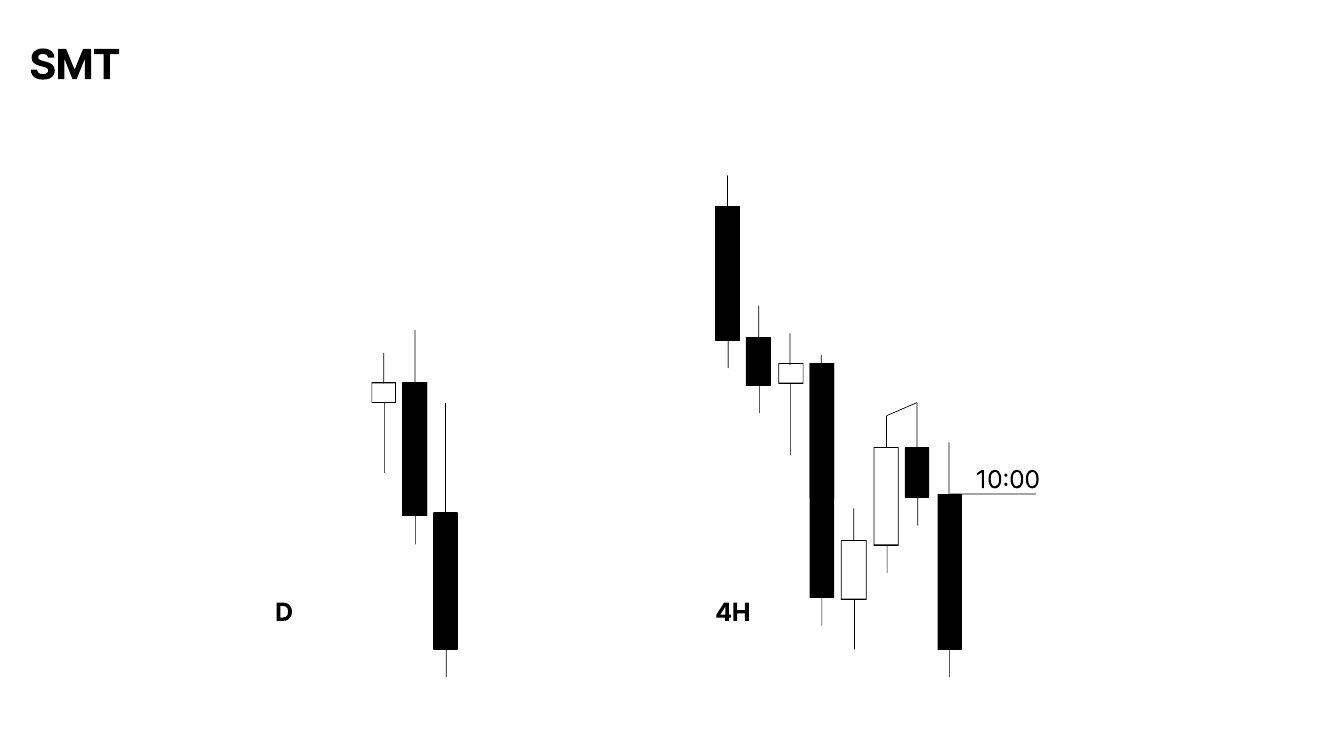
Example of the key level being SMT. The daily is on the left and the 4H on the right, with the SMT marked on the 4H and the 10:00 level on the right.
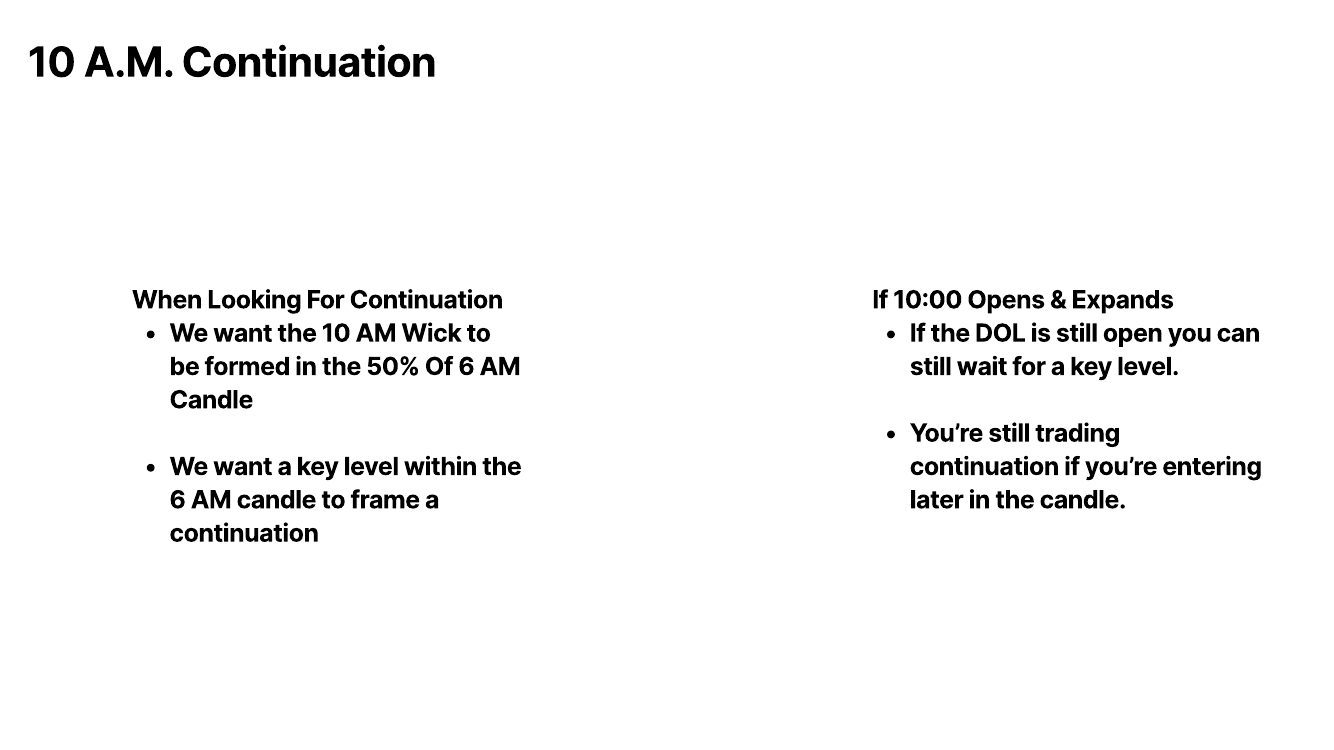
When you're looking for the continuation, you want the 10 AM wick to form in the 50% of the 6 AM candle, and a key level within the 6 AM candle to frame the continuation. If 10:00 opens and expands, and the DOL is still open, you can still wait for a key level. You're still trading continuation if you enter later in the candle.
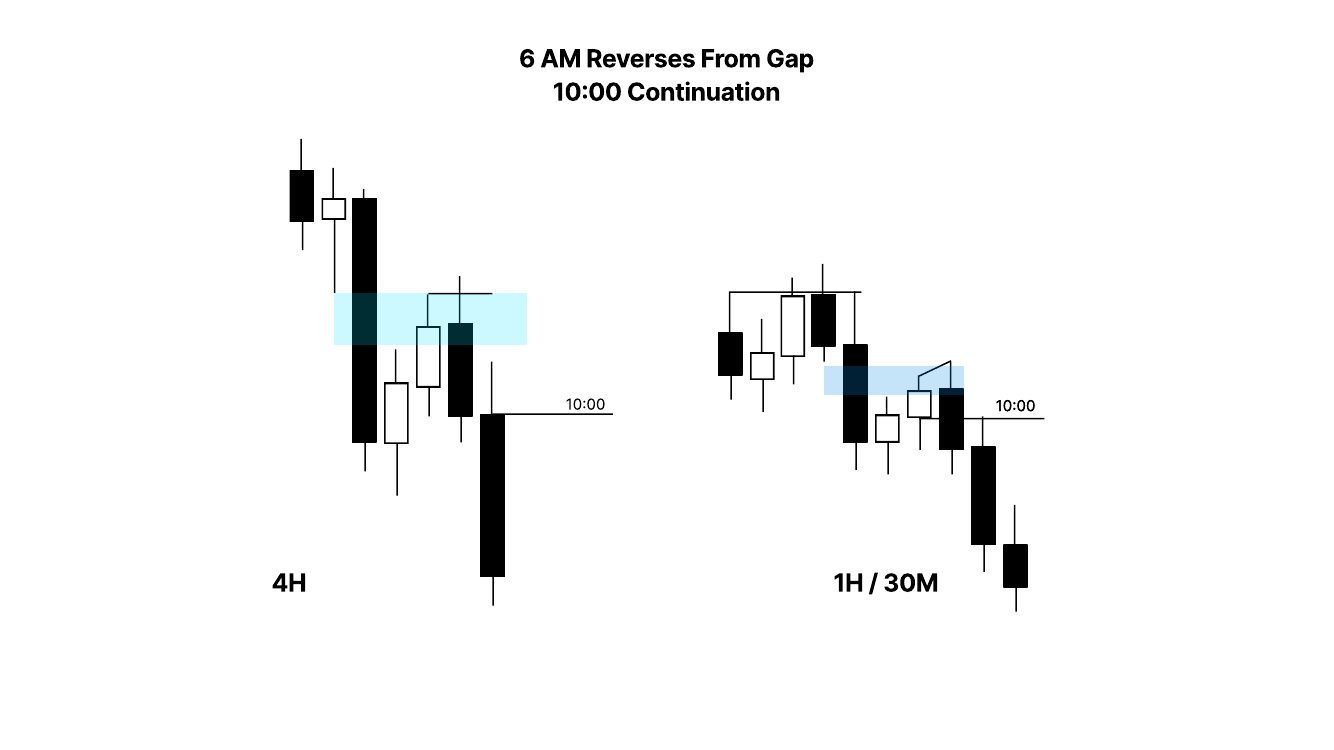
Example of the 6 AM candle reversing from a gap, followed by a 10:00 continuation. The 4H is on the left and the 1H/30M on the right.
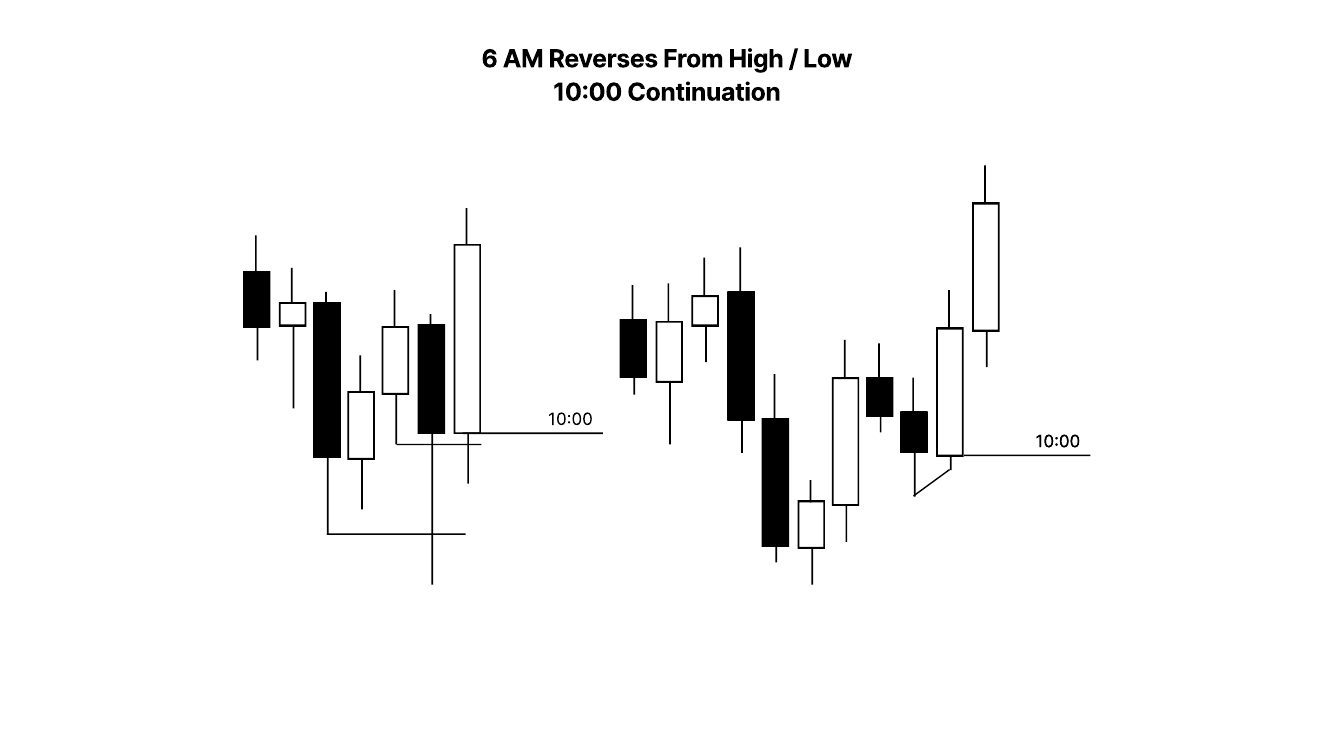
Example of the 6 AM candle reversing from a high or low, followed by a 10:00 continuation, shown on the 4H and on the 1H/30M.
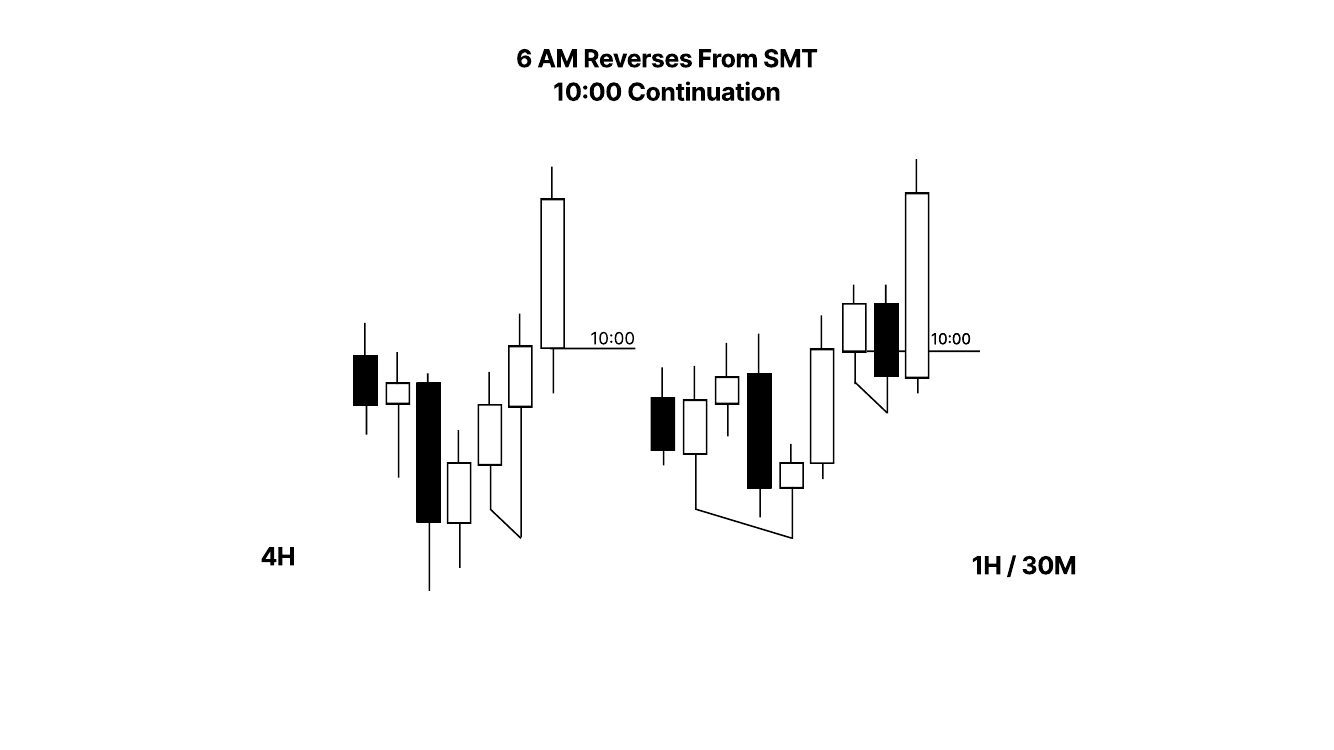
Example of the 6 AM candle reversing from SMT, followed by a 10:00 continuation, shown on the 4H and on the 1H/30M.
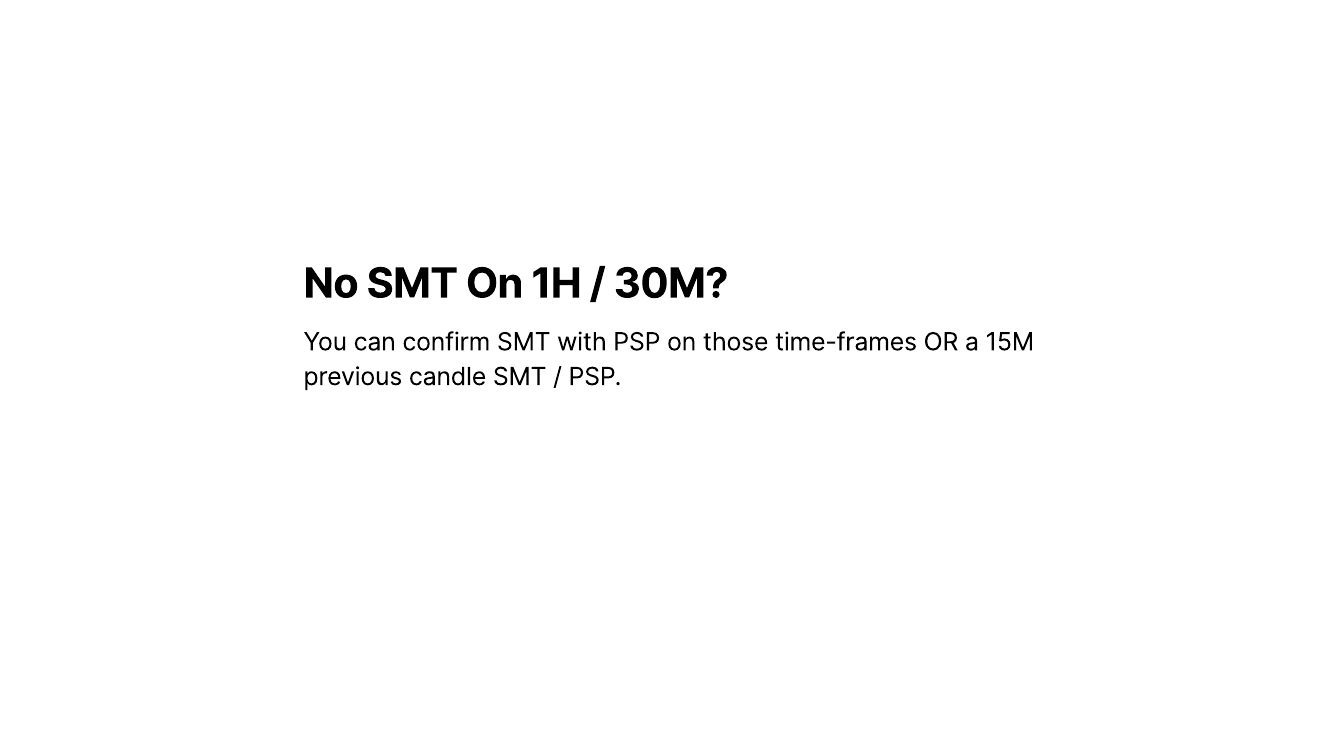
If there's no SMT on the 1H/30M, you can confirm it with a PSP on those timeframes, or with a 15M previous candle SMT or PSP.
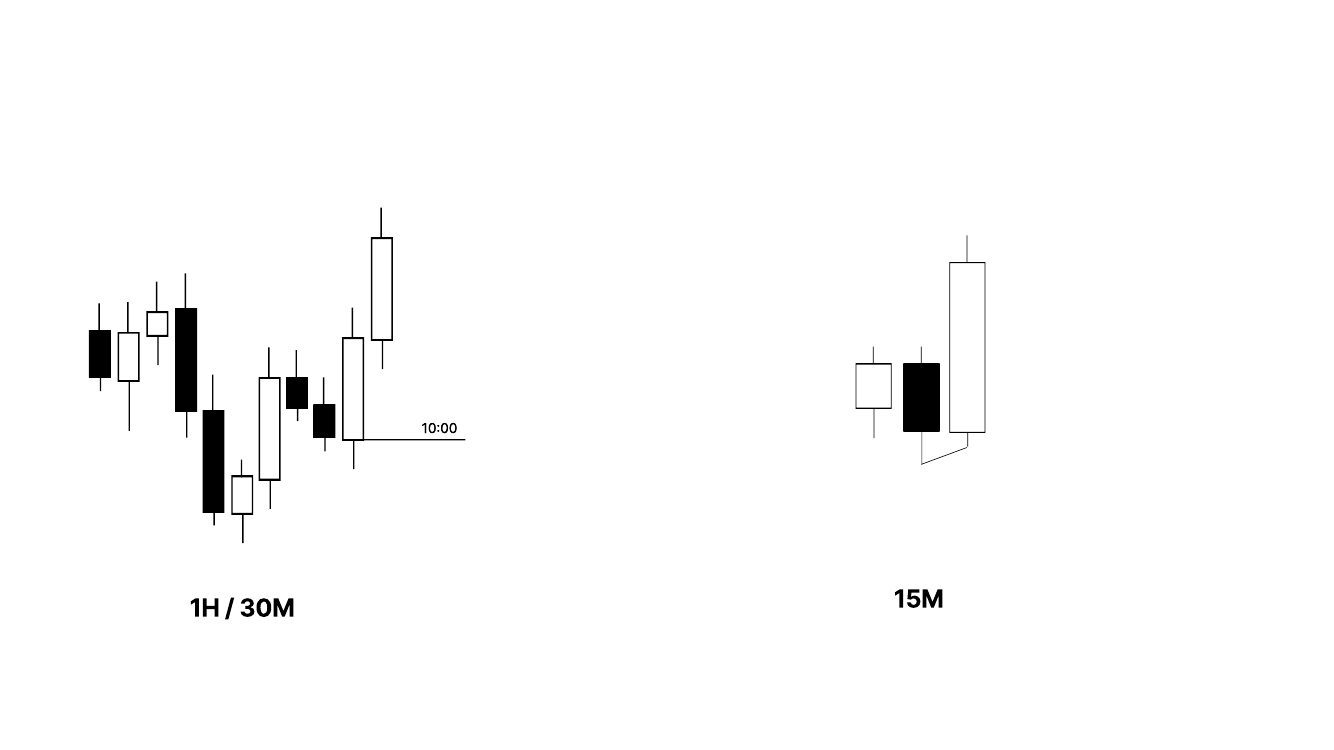
The first example of using the 15M. The 1H/30M is on the left with the 10:00 level marked, and the 15M is on the right, where the SMT or PSP shows up.
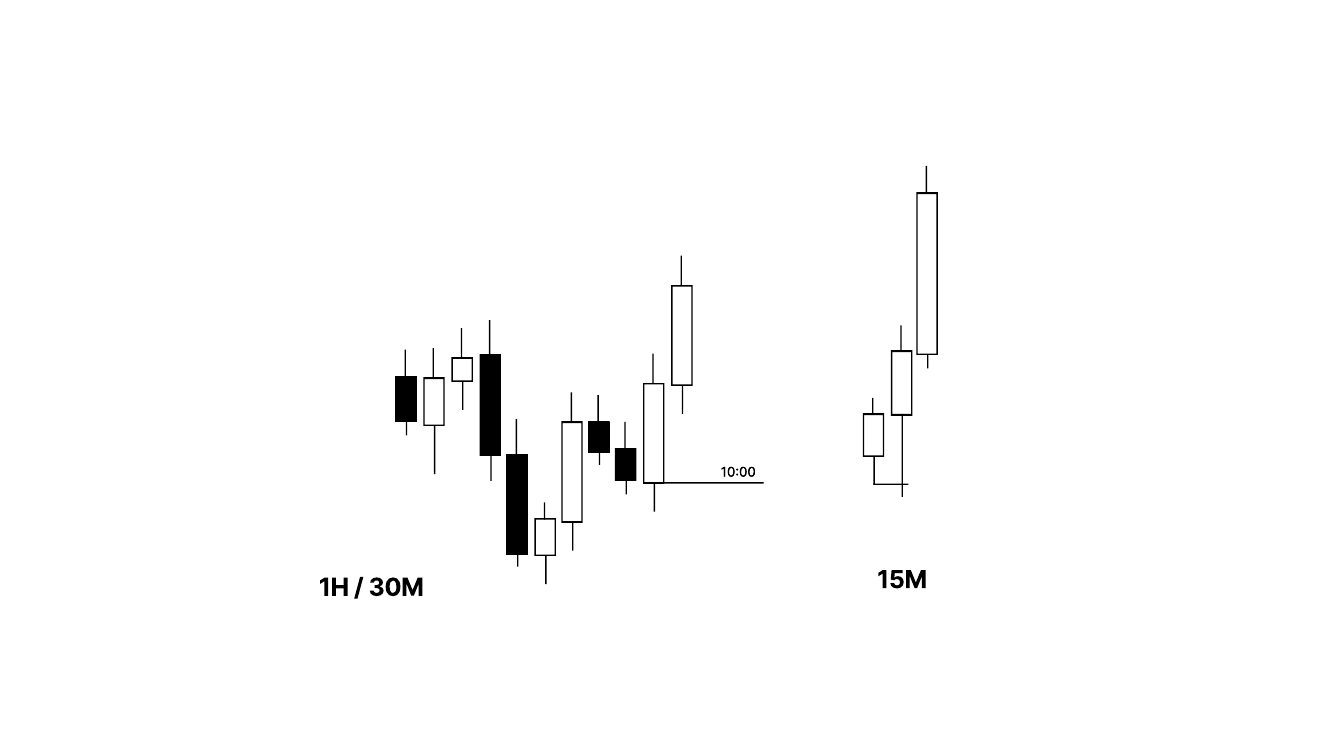
The second example, same idea. The 1H/30M shows the 10:00 level, and the 15M shows the confirmation at the low before price moves up.
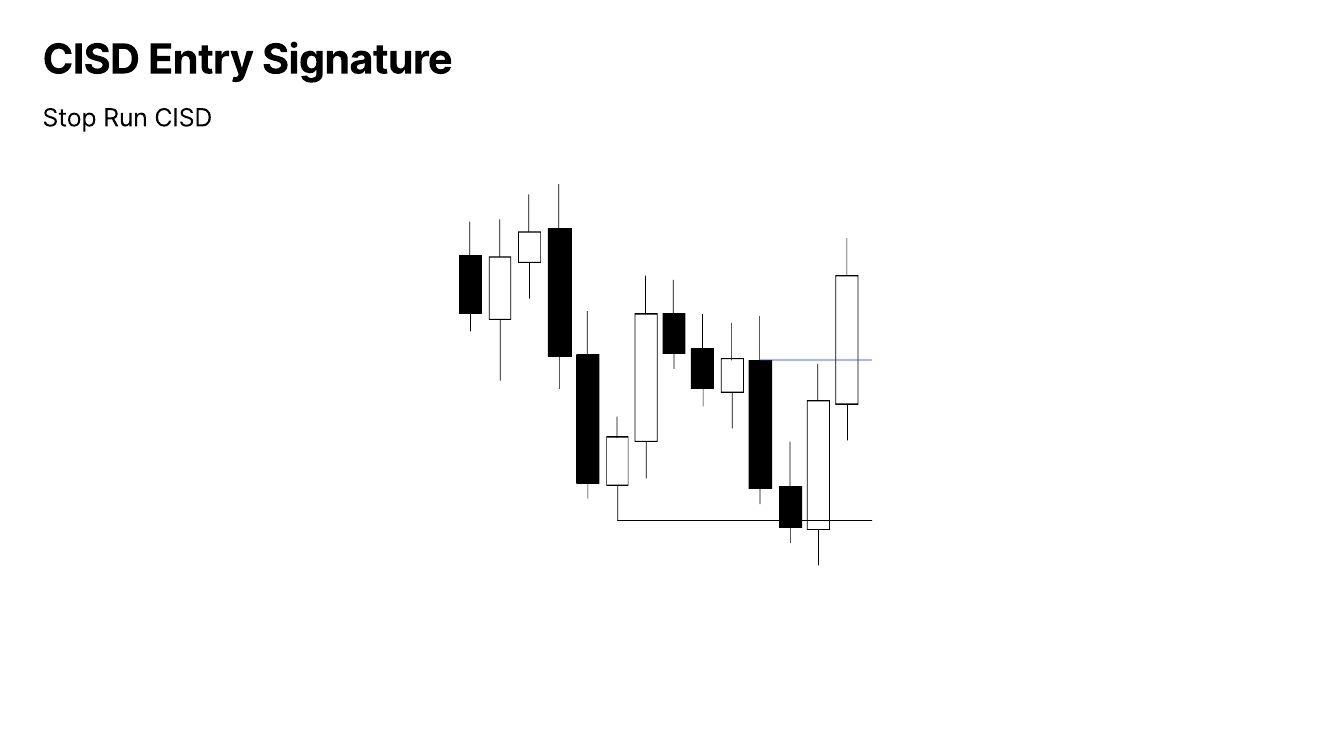
The first of three entry signatures. Price runs the stops below a low, then a candle closes back above the marked level. That close is the CISD, and it's your entry signal.
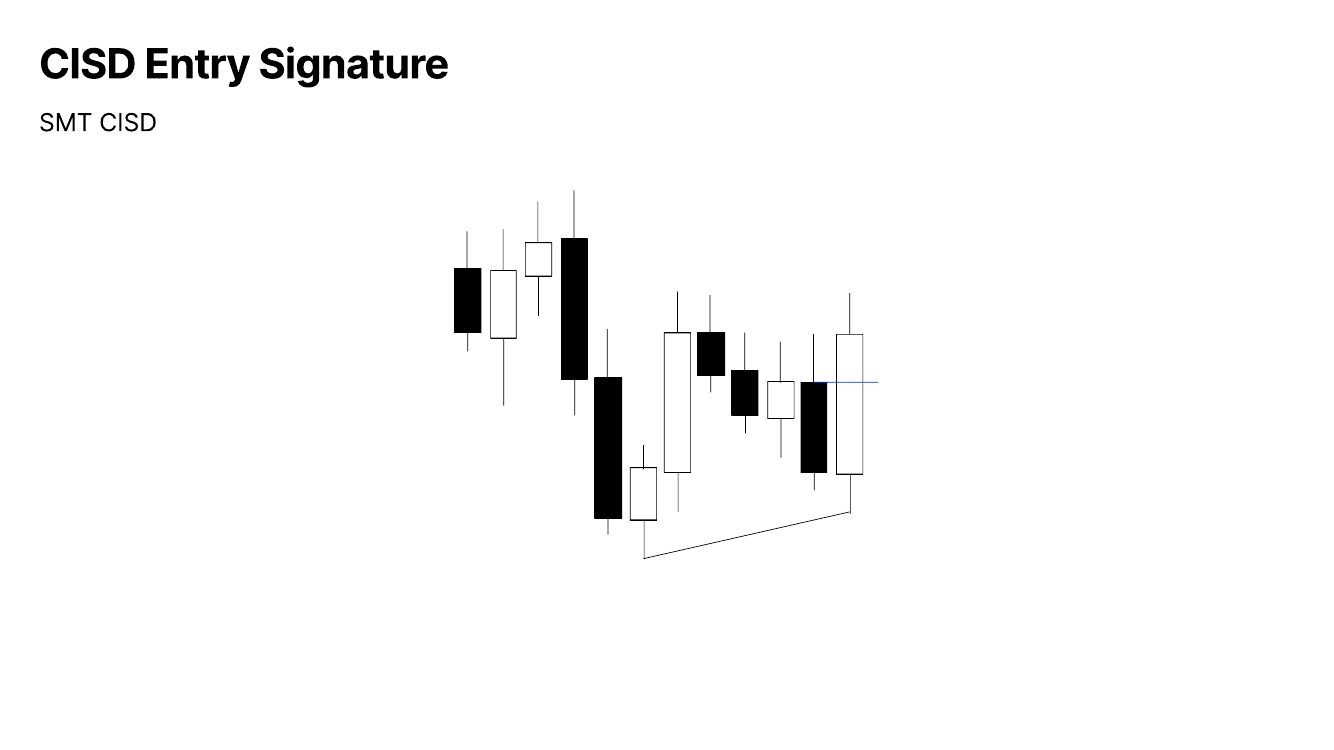
The second entry signature. With SMT marked at the low, price then closes back above the marked level. That's the SMT CISD.
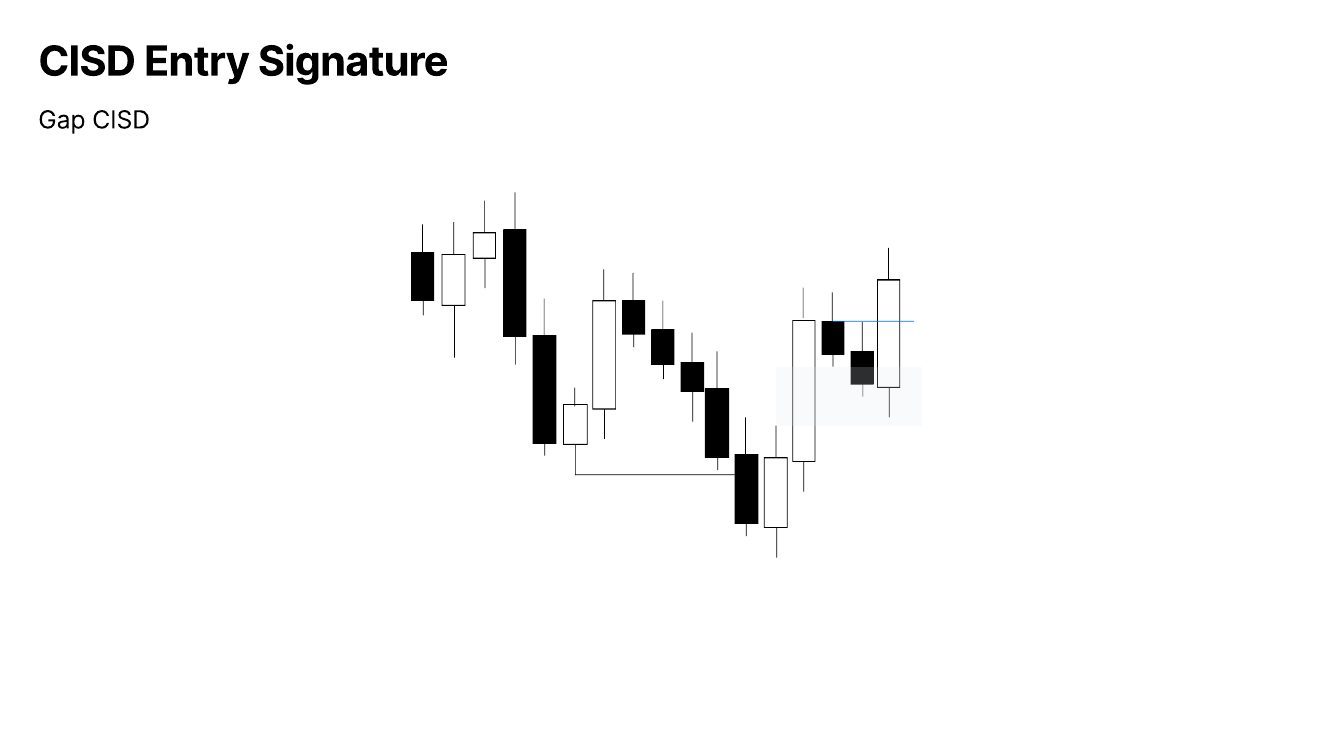
The third entry signature. Price trades into the gap, and then a candle closes back above the marked level. That's the Gap CISD.
New guides land here first, and the newsletter tells you when they do.